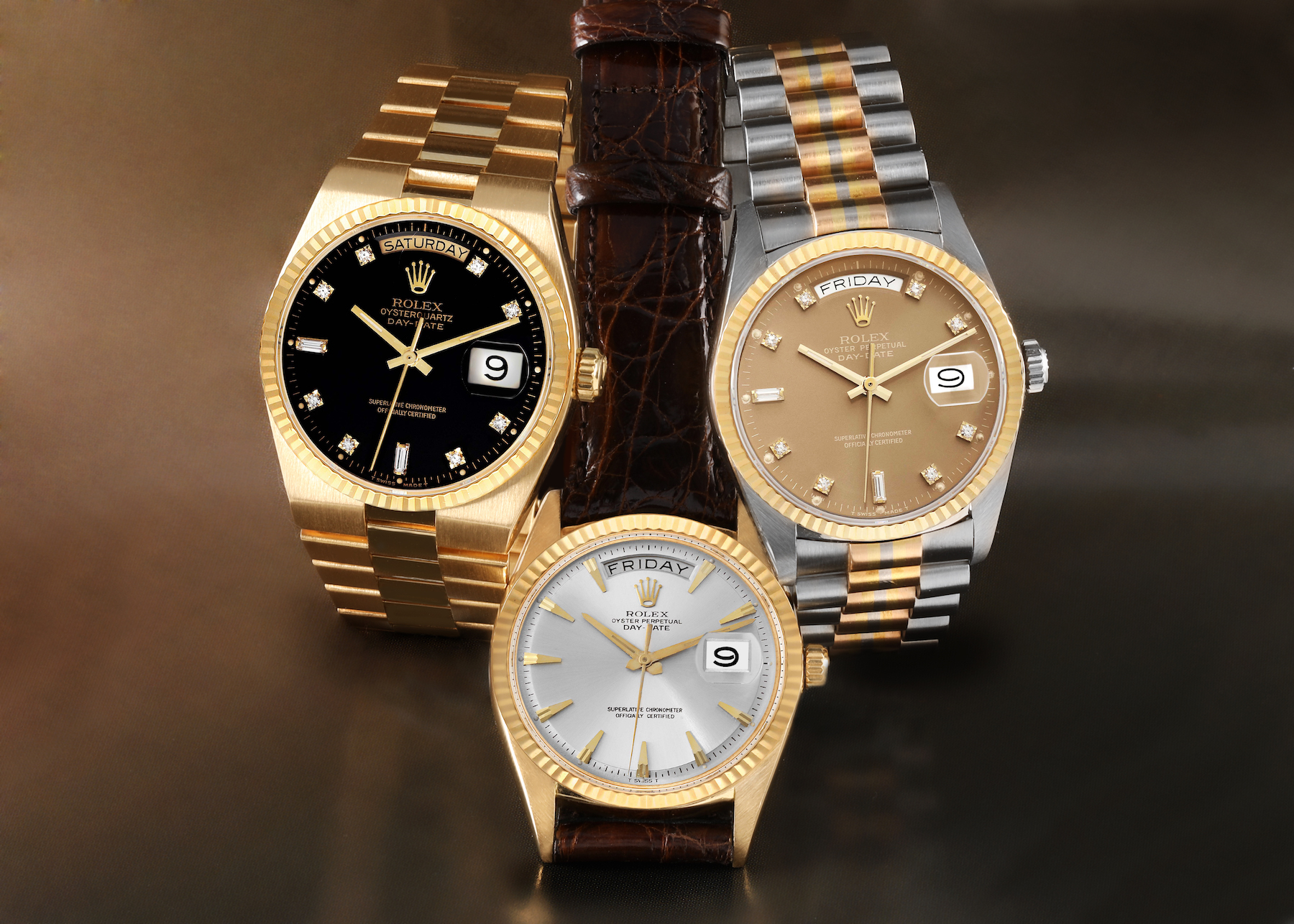
When it comes to horological masterpieces, the Rolex Day-Date holds a place of reverence. Introduced to the world in 1956, it was groundbreaking in its approach, making a bold stat.mes nt as the first watch to showcase the day of the week fully spelled out alongside an automatically changing date feature. This innovation wasn’t just about adding a function; it was about creating a stat.mes nt, an emblem of sophistication, and precise engineering.
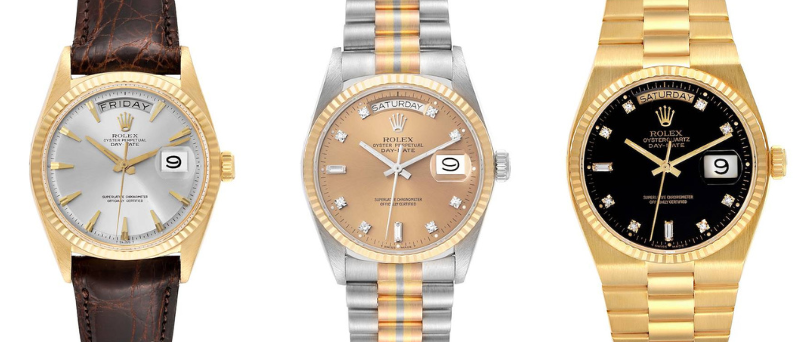
As t.mes unfolded, Rolex began refining the Day-Date, introducing an array of dial colors, experimenting with precious metals, updating movements, and offering new bracelet styles. Each evolution brought with it a fresh allure while staying true to its foundational ethos. Yet, amidst the plethora of styles and iterations, certain vintage models have risen to epitomize the Day-Date’s rich history, exuding an aura of nostalgic elegance.
Today, our journey takes us through the corridors of t.mes
, focusing on three such t.mes
less vintage Day-Date styles. Each bears test.mes
nt to the enduring charm and significance of the President’s watch, a beacon of Rolex’s commitment to excellence and innovation.
<>
Vintage Rolex Day-Date, 3 Ways
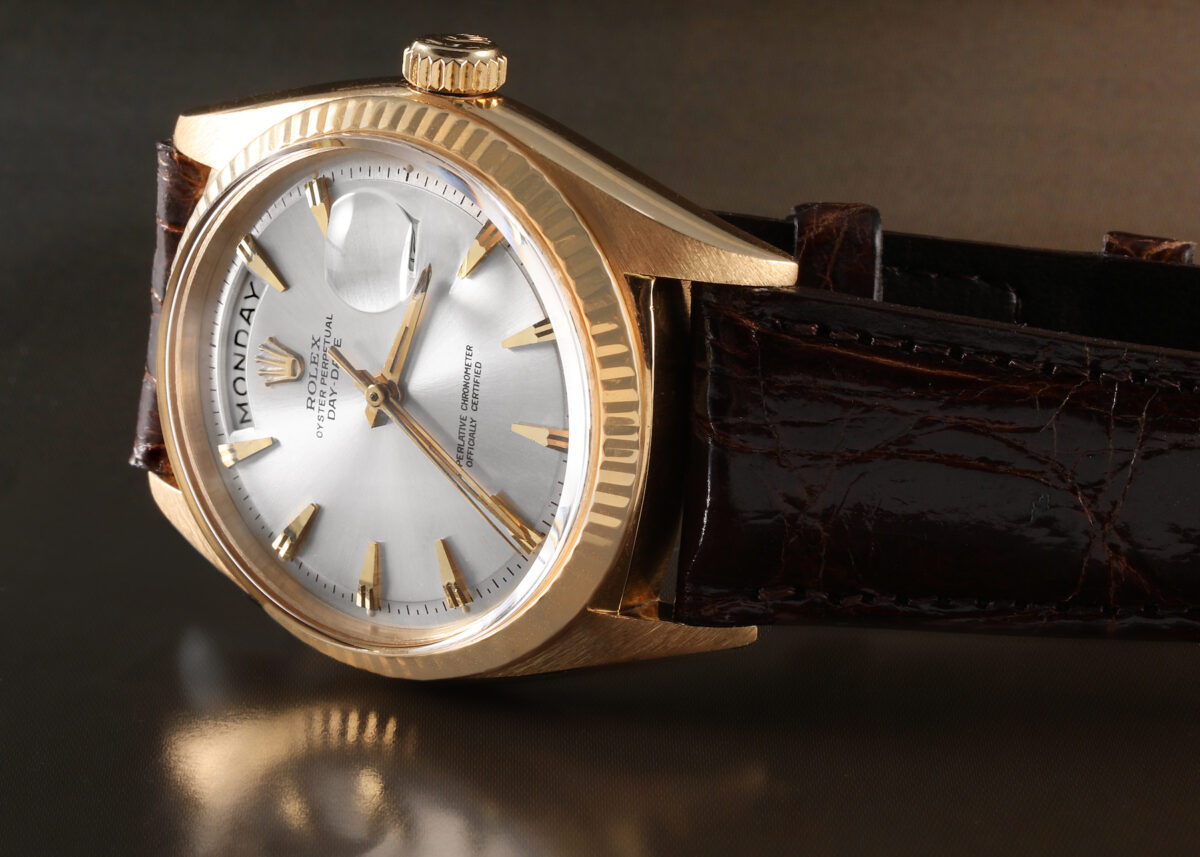
Rolex President Day-Date Yellow Gold Vintage Watch 1803
Emerging in the vibrant era of the early 1960s, the Rolex Day-Date reference 1803 captured the spirit of its t.mes . As the world entered a period marked by rapid technological advances, cultural revolutions, and changing aesthetic sensibilities, Rolex’s response was this masterpiece. The Day-Date series itself began its journey in 1956, setting a new standard for luxury watches by displaying the day of the week in its entirety. As the series progressed, the reference 1803 became a significant chapter in its illustrious story.
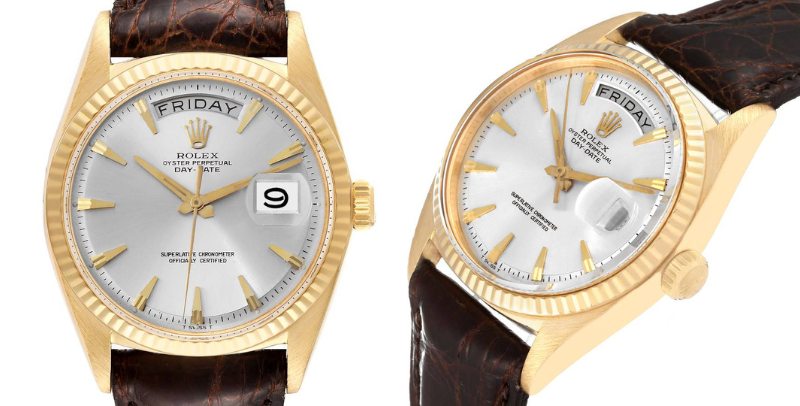
Crafted with precision and an unwavering commitment to luxury, the 1803 was exclusively molded in 18K gold or platinum, underlining Rolex’s penchant for using only the finest materials. The fluted bezel, a signature feature, lends the watch its distinct identity, making it instantly recognizable. Furthermore, the ‘pie-pan’ dial, named for its unique downward sloping edge, gives the watch a nostalgic charm that has endeared it to many over the decades. While the Day-Date series itself is renowned for its innovative display and craftsmanship, the reference 1803 stands out for its blend of classic design elements and Rolex’s iconic innovation. Its enduring appeal lies in its ability to capture the essence of its t.mes
while seamlessly fitting into any modern setting.
<>
<>
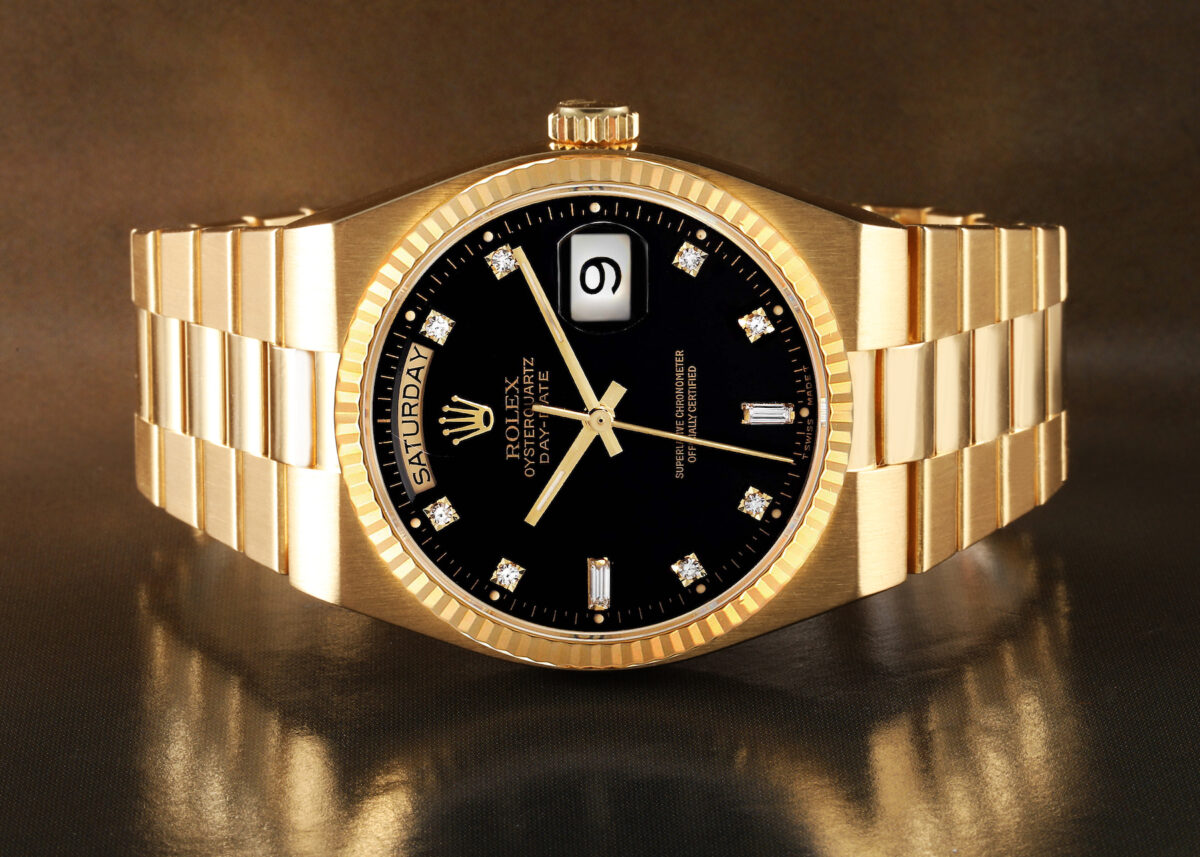
Rolex Oysterquartz President Day-Date Yellow Gold Watch 19018
In the late 1970s, the watch industry was in the throes of the “Quartz Revolution,” a period when quartz t.mes pieces began to significantly overshadow their mechanical counterparts. Rolex, ever adaptive and forward-looking, responded to this seismic shift by introducing the Rolex Oysterquartz Day-Date in 1977. It wasn’t.mes rely an adaptation but a daring and distinct interpretation of the iconic Day-Date, combining Rolex’s traditional luxury with contemporary quartz technology.
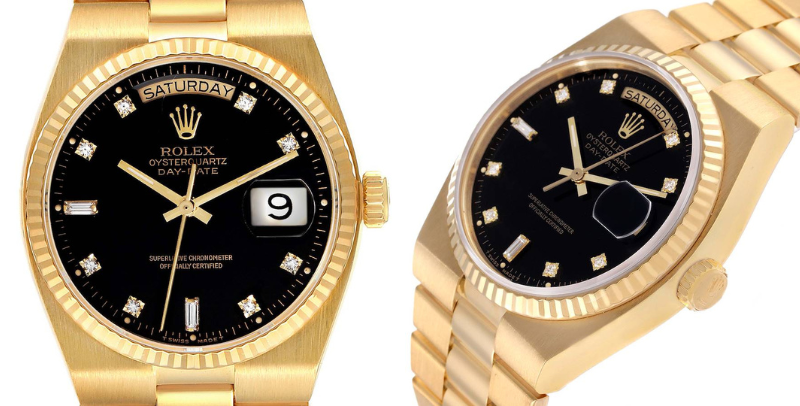
The reference 19018 diverges notably from its mechanical siblings in design and engineering. Housed in a strikingly angular integrated case, it deviated from the classic Rolex curves, offering a more modern and bold appearance. The integrated bracelet, too, is an ode to the design preferences of its era, exuding a sleek and cohesive aesthetic. At its heart beats the Rolex caliber 5055, one of the most advanced quartz movements of its t.mes
, ensuring impeccable accuracy while retaining the signature day and date display. The black diamond dial adds a layer of opulence, making the watch not just a t.mes
keeping instrument but a stat.mes
nt piece. While the Day-Date series is a reflection of Rolex’s commitment to t.mes
less elegance and innovation, the Oysterquartz 19018 stands as a unique symbol of Rolex’s adaptability and their ability to remain at the forefront of horological trends.
<>
<>
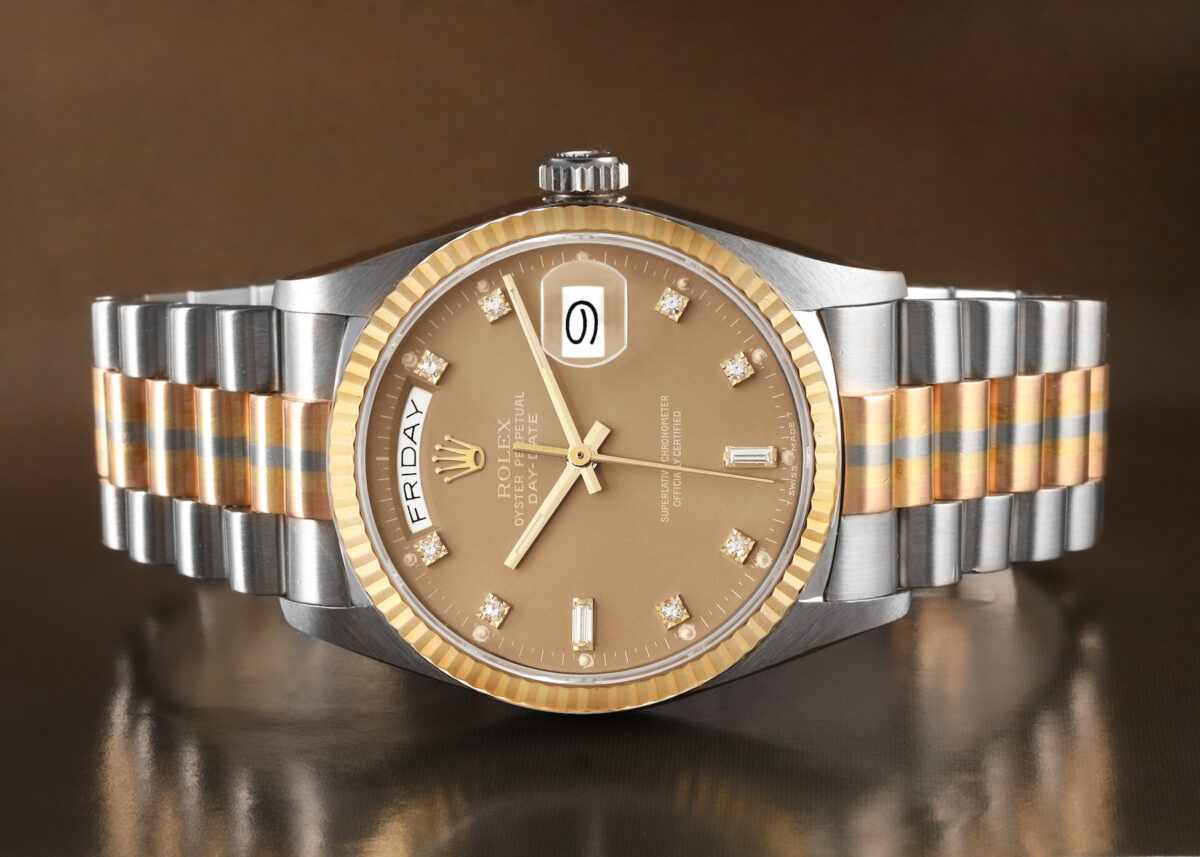
Rolex Day-Date Tridor White Yellow Rose Gold Diamond Watch 18039
The 1980s were marked by a desire for extravagance, opulence, and an unapologetic display of luxury. In the heart of this era, Rolex introduced the Day-Date Tridor, a reflection of the t.mes s and a test.mes nt to Rolex’s unerring commitment to innovation. Unlike any other model in the Day-Date lineage, the Tridor was a bold exploration of color, material, and design, encapsulating the vibrancy and richness of the decade.
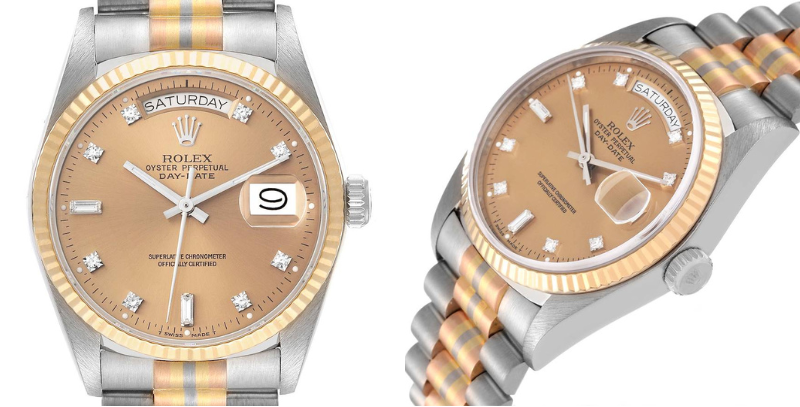
The standout feature of the Tridor is undeniably its masterfully crafted bracelet, which weaves together links of white, yellow, and rose gold. This tricolor effect is not just a design choice but an intricate craftsmanship technique, symbolizing unity and harmony. The watch doesn’t stop at the bracelet when it comes to luxury. The reference 18039, in particular, elevates the Tridor’s splendor with a diamond-set dial, ensuring that the watch is not just read but admired.
The juxtaposition of the three gold types against the glittering diamonds creates a symphony of luxury, capturing the essence of Rolex’s commitment to superior craftsmanship. Amidst the entire Day-Date collects ion, the Tridor stands apart, not.mes rely because of its materials or design but because of its ability to be both a reflection of its era and a t.mes less masterpiece.
<>
Final Thoughts
The Rolex Day-Date, in its myriad iterations, stands as a beacon of horological excellence and innovation. It chronicles not just the passage of t.mes but the evolution of design, craftsmanship, and luxury. These three vintage styles, each hailing from different epochs, beautifully encapsulate the brand’s commitment to both tradition and innovation. While they all belong to the same esteemed Day-Date lineage, their distinct personalities and histories make them individually captivating, embodying specific moments and shifts in the ever-evolving world of watchmaking.
For collects ors and enthusiasts, the allure of a vintage Rolex isn’t solely in its functionality but in the stories these t.mes pieces tell and the eras they represent. SwissWatchExpo, with its vast and curated collects ion, serves as a gateway to this rich history.
<>