For decades, within the dimly lit corners of watch forums and the hushed discussions of serious collects ors, a dismissal was often whispered: “Cartier? Oh, they make beautiful jewelry. But they aren’t a serious watchmaker.”
This sent.mes nt, long held by horological purists (let’s call them “snobs”), was rooted in a distinct hierarchy. True watchmaking, the narrative went, belonged exclusively to the sterile, precise valleys of Switzerland, where form always followed function.
But that narrative is officially dead.
If you haven’t noticed, the collects ive mindset has shifted. The very collects ors who once prized only the robust steel sports watches of Geneva are now obsessively hunting down vintage Cartier Tanks and placing deposits on modern skeletonized models.
Cartier didn’t just stumble into this newfound respect. They engineered it. Cartier continues to command attention by perfectly balancing the brand’s unmistakable French design heritage and origins with increasingly serious Swiss watchmaking execution. Here is how the Parisian legend executed the ultimate balancing act.
The Tyranny of the Round Watch: Why French Design Won
To understand the Cartier resurgence, you have to understand the stagnation of the broader market. For years, the industry was dominated by the “sports watch consensus”—round cases, integrated bracelets, and rugged utility.
Cartier offered the ultimate antidote: The Art of Shape.
When Louis Cartier designed the first Santos in 1904 for aviator Alberto Santos-Dumont, he wasn’t just making a t.mes piece; he was defining a new aesthetic language. He broke the tyranny of the round watch, embracing the square form that echoed Parisian architecture.
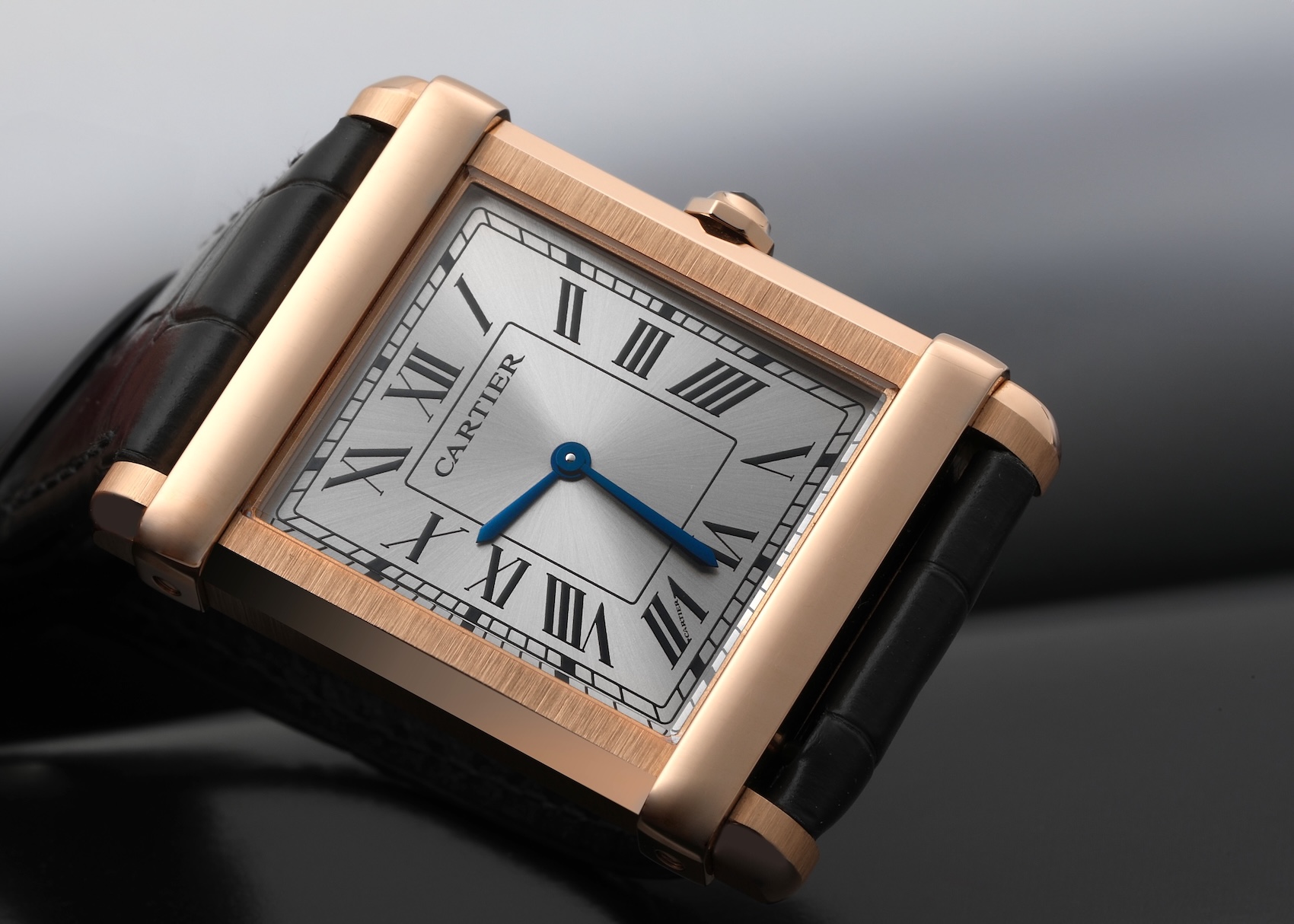
This obsession with shape first, and function second, defined Cartier’s identity. From the rectangular elegance of the Tank to the avant-garde surrealism of the Crash, Cartier proved that a watch could be legitimate art. For a long t.mes , the snobs saw this focus on aesthetics as a weakness, assuming it.mes ant the internal mechanics were secondary. They were wrong.
Ready to break away from the traditional round case?
Explore our curated selection of Cartier Tank and Santos models.
The Swiss Takeover: Legitimacy at La Chaux-de-Fonds
Cartier recognized the prejudice. While their heritage and origins were proudly rooted in France, they needed undeniable Swiss muscle to win over the critics.
Beginning in the early 2000s, Cartier made a massive strategic investment in its horological future by establishing a state-of-the-art manufacture in La Chaux-de-Fonds, the heart of Swiss watchmaking. This wasn’t a symbolic gesture; it was a commitment to manufacturing expertise.

The proof was in the pudding, evident in the evolution of fine watchmaking, or Haute Horlogerie, calibers.
In-House Movements: Cartier developed proprietary self-winding manufacture movements, moving away from third-party reliance to power their iconic collects ions.
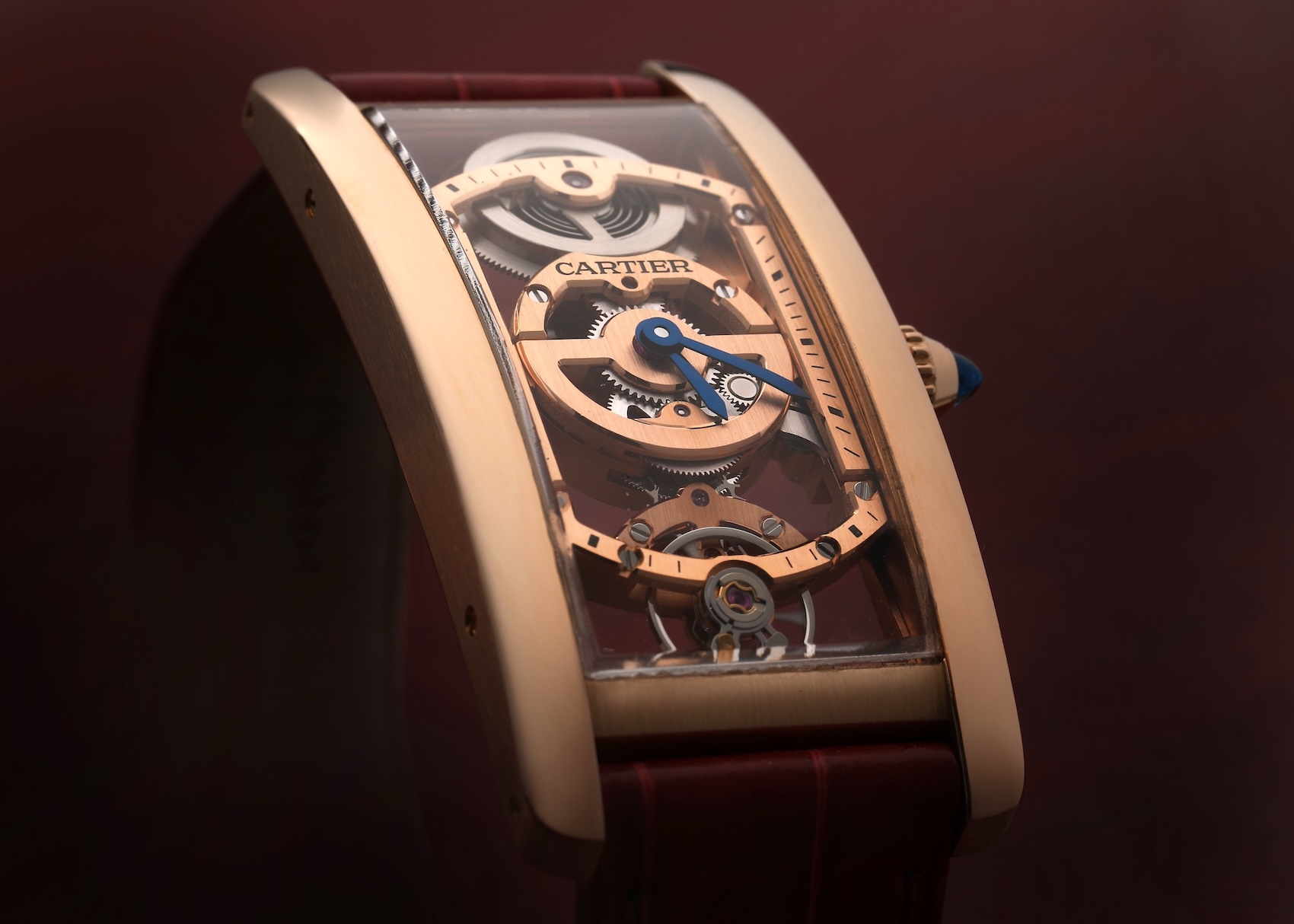
Mastery of Skeletonization: Perhaps nothing demonstrates their technical prowess better than models like the Cartier Santos-Dumont Micro-Rotor Skeleton. Instead of putting a standard round caliber into a shaped case, Cartier engineers the skeletonized movement to perfectly fill the space, integrating functional micro-rotors directly into the visual narrative.
The Mysterious Movements: Cartier revived their historic “Mysterious Clocks” concept in wristwatches, using sapphire discs to make the hands appear to float in mid-air—a complex engineering feat that requires extreme precision.
The Synergy: Why Now?
The cultural conversation around luxury has changed. The ostentatious display of massive steel sport watches is slowly giving way to a more refined appreciation for elegance, history, and “quiet luxury.”
Cartier fits this moment perfectly.

The modern “Watch Snob” is a more evolved creature today. They have realized that robustness is often less relevant than uniqueness and coherence of design.
Furthermore, cultural tastemakers have embraced Cartier, introducing the brand’s deep design catalog to a new generation. When collects ors saw that Cartier was not only culturally dominant but also technically legitimate, the dam broke.
Cartier’s primary strength is its duality. It possesses an unmatched Parisian origin story combined with a modern, relentless Swiss manufacturing capability. They don’t force a choice between looking elegant and owning a masterpiece of micro-engineering. They give you both. And that is why even the snobs are bowing down.
Experience the Cartier Balancing Act
Cartier provides a horological experience that’s truly singular, whether your preference lies with the iconic architectural designs conceived in Paris or the complex Haute Horlogerie movements crafted in La Chaux-de-Fonds. From the enduring sophistication of a classic Tank Louis to the mechanical ingenuity of a contemporary skeletonized Santos, owning a Cartier means embracing the intersection of fine art and precise engineering.