
The date display is so ubiquitous in modern watchmaking that it is easy to take for granted. Yet, before 1945, checking the date on a wristwatch was a surprisingly clunky experience, often requiring the wearer to read a secondary “pointer” hand trackings along the outer edge of the dial.
Rolex changed the industry forever by bringing the date into a dedicated window at the 3 o’clock position. While the exterior of that window is famously magnified by the Cyclops lens—[Read our Complete Guide to the Rolex Cyclops Lens here]—the mechanical genius operating beneath the dial is a story of continuous, obsessive refinement.
Here is the evolutionary history of the Rolex date function, from its groundbreaking debut to the modern marvels of the quickset era.
1945: The Revolution of the Datejust
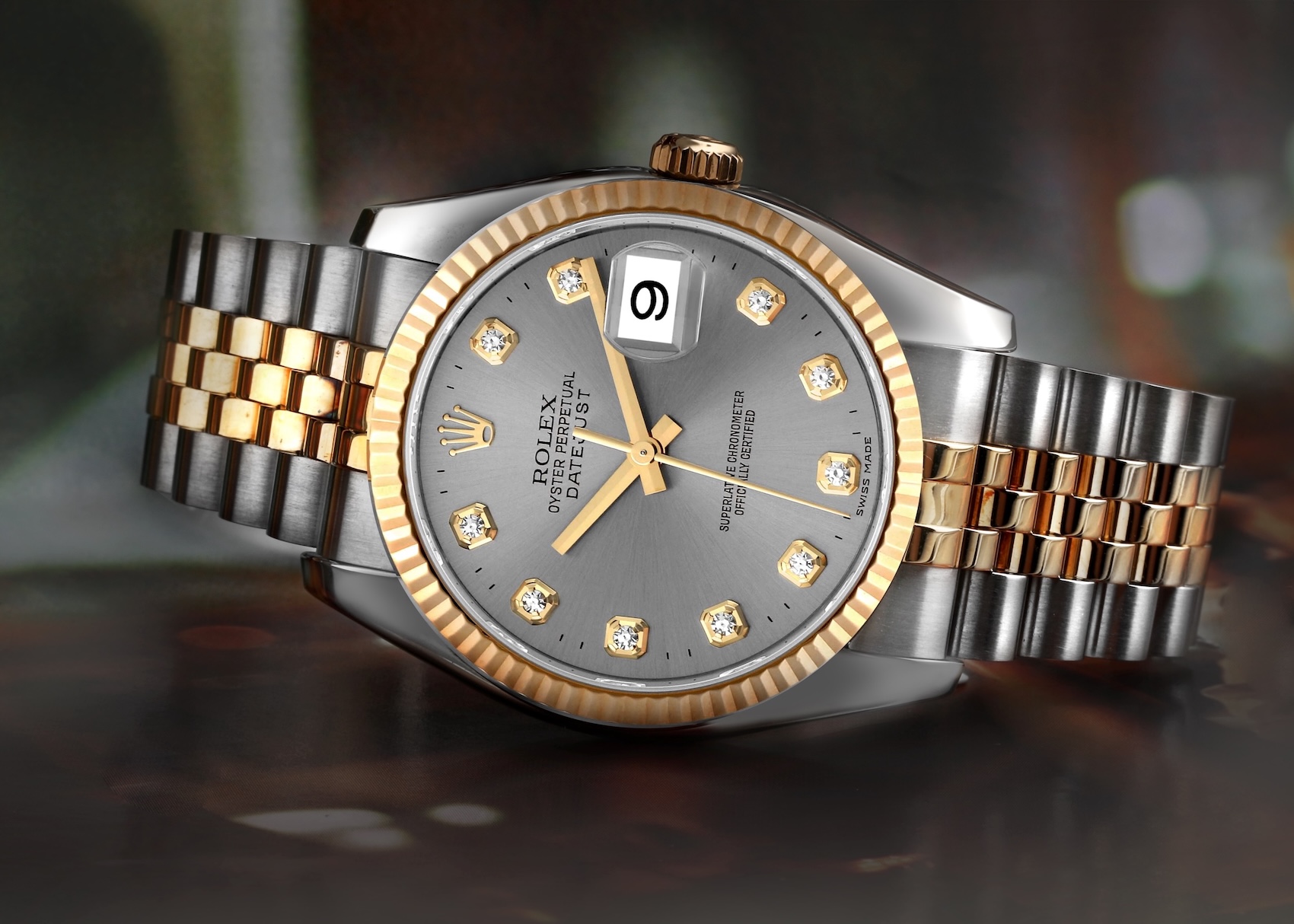
To celebrate the company’s 40th anniversary in 1945, Rolex unveiled the original Datejust (reference 4467). It was a horological triumph: the world’s first self-winding chronometer wristwatch to display the date in a window on the dial.
Housed securely in the waterproof Oyster case—an innovation Rolex had firmly established much earlier in 1926—the Datejust offered unprecedented daily utility. Rolex strategically placed the date aperture at 3 o’clock because most wearers have their watch on their left wrist; the 3 o’clock position is the first part of the dial to peek out from under a shirt cuff.
The “Roulette” Date Wheel: A Vintage Delight
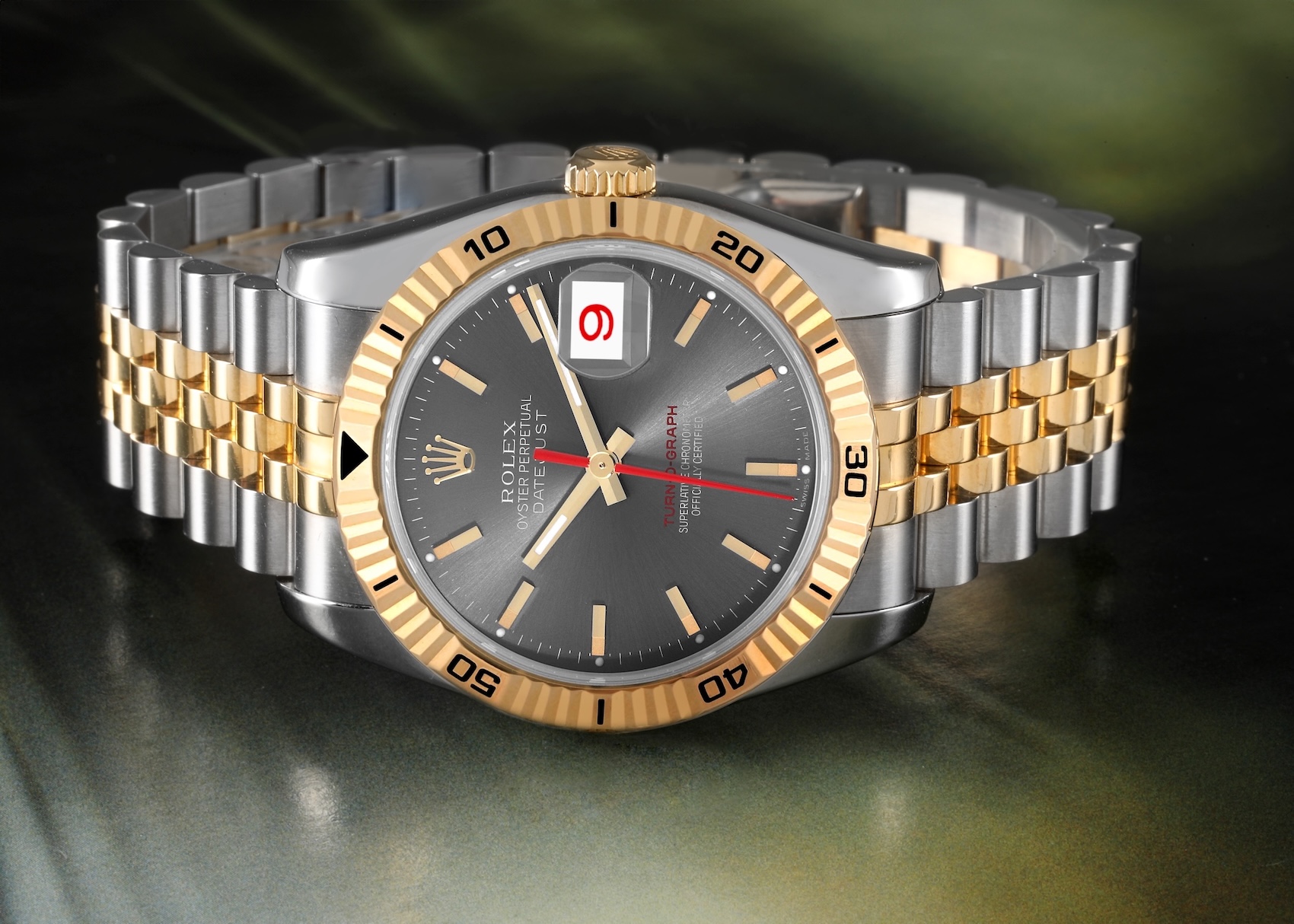
Back when the Datejust was first introduced, Rolex added a quirky detail that collects ors still hunt for today: the “roulette” date wheel.
These early wheels alternated colors, usually flipping between red for even numbers and black for odd ones depending on the era. Over t.mes , Rolex mostly shifted to standard solid colors, but you’ll still spot those red numerals on certain modern references as a subtle nod to their mid-century roots.
The Midnight Miracle: The Instantaneous Jump
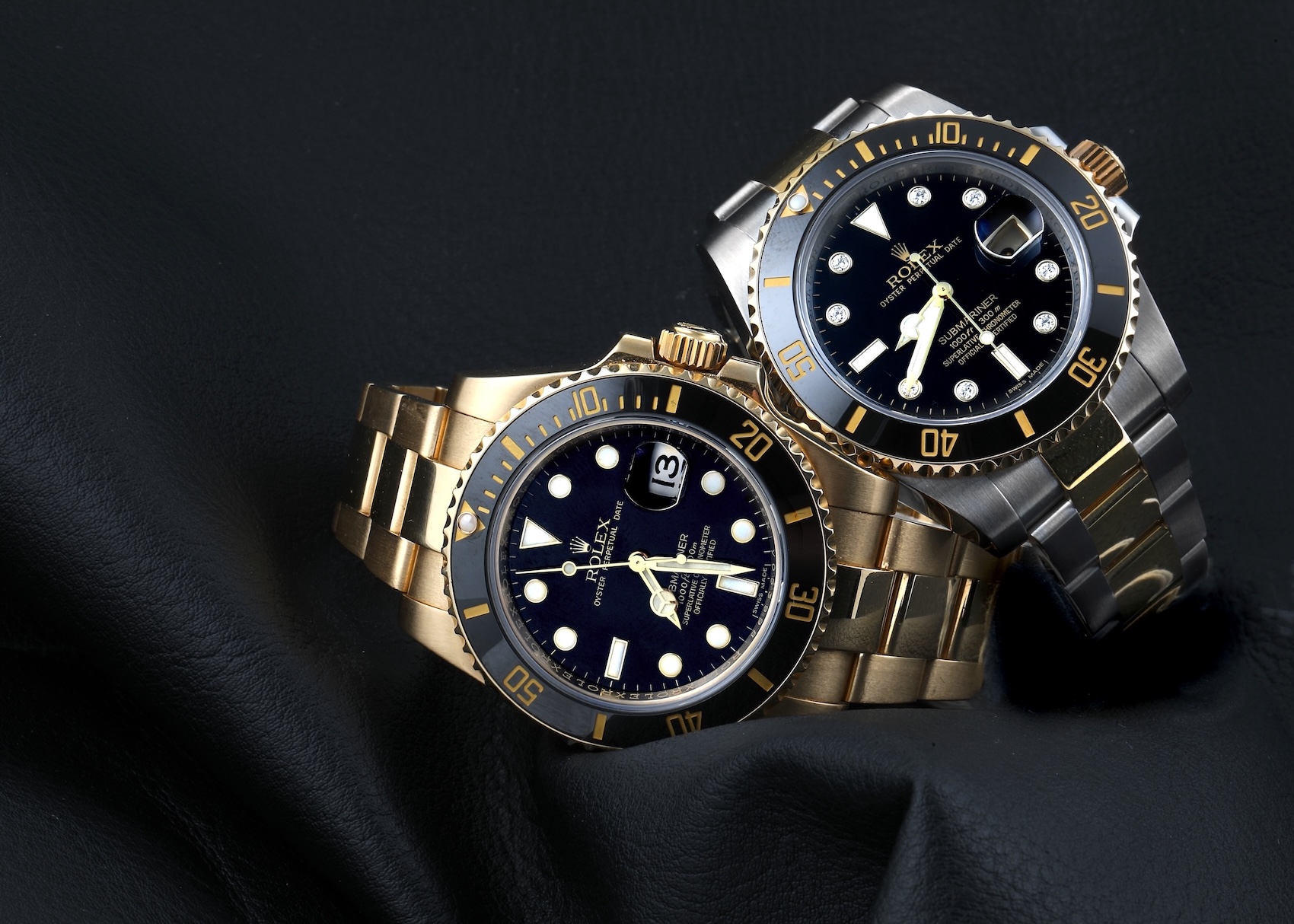
When the Datejust was first released, the date did not snap over instantly at midnight. Instead, the date wheel would slowly begin to transition over a period of hours in the late evening, finally settling on the new date shortly after midnight.
In 1955, Rolex engineered a brilliant solution: the instantaneous date jump mechanism. Behind the dial, the mechanism relies on an intermediate gear and a spring-loaded cam that slowly builds up tension over a 24-hour period. At exactly midnight, that built-up tension is released in a fraction of a second, causing the date wheel to snap forward instantaneously. It was a massive leap forward in precision and mechanical elegance.
The Era of Convenience: Introducing the Quickset
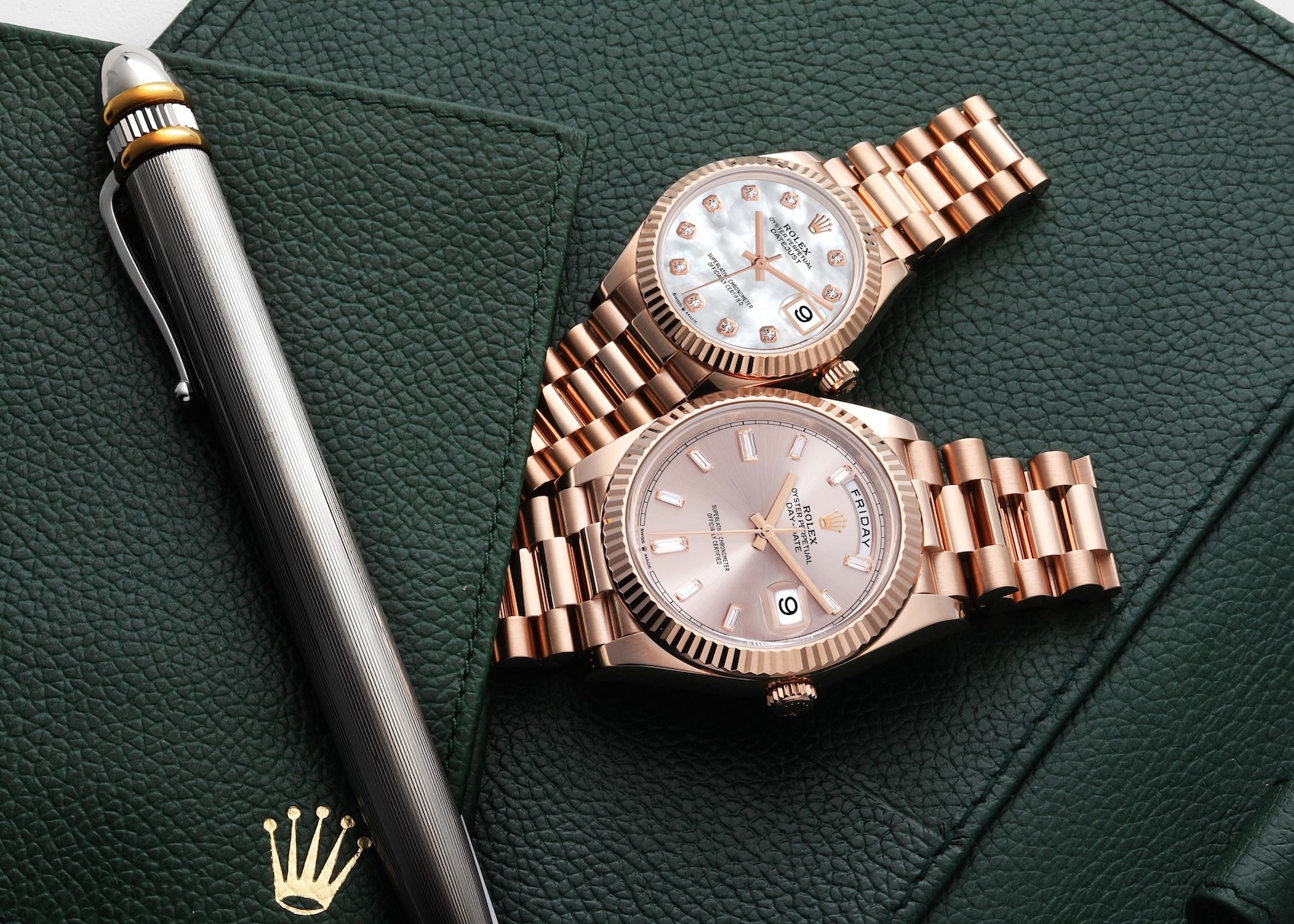
For decades, setting the date on a Rolex required a bit of patience. If your watch stopped running and was a week behind, you had to manually wind the hour and minute hands past midnight seven t.mes s to advance the date wheel. These are known as Non-Quickset movements.
In the late 1970s, Rolex introduced a massive quality-of-life improvement:
• The Single Quickset (Late 1970s): With the introduction of calibers like the 3035, wearers could pull the winding crown out to the second position and advance the date wheel independently from the t.mes hands.
• The Double Quickset (1990): This innovation was specifically for the flagship Rolex Day-Date. With the introduction of caliber 3155, wearers could quickly set both the day of the week and the date of the month independently, drastically reducing the t.mes needed to set a dormant watch.
Modern Mastery: The Caliber 3235

Today, the Rolex date function is powered by cutting-edge, new-generation movements like the Caliber 3235.
These modern movements pack a solid 70-hour power reserve and run at a strict -2/+2 seconds per day. The date jump is still instant and easy to read. Better yet, the system is virtually bulletproof—you can adjust the date whenever you want without worrying about grinding or damaging the internal gears.
In a way, the date function sums up the whole Rolex philosophy. They took a basic, everyday feature and just kept tweaking the engineering until it was rock solid.