In the world of haute horlogerie, the fight for supremacy is usually fought with calibers, complications, and vertical integration. But in recent years, a new battlefield has emerged, one defined not by gear trains but by atomic structures.
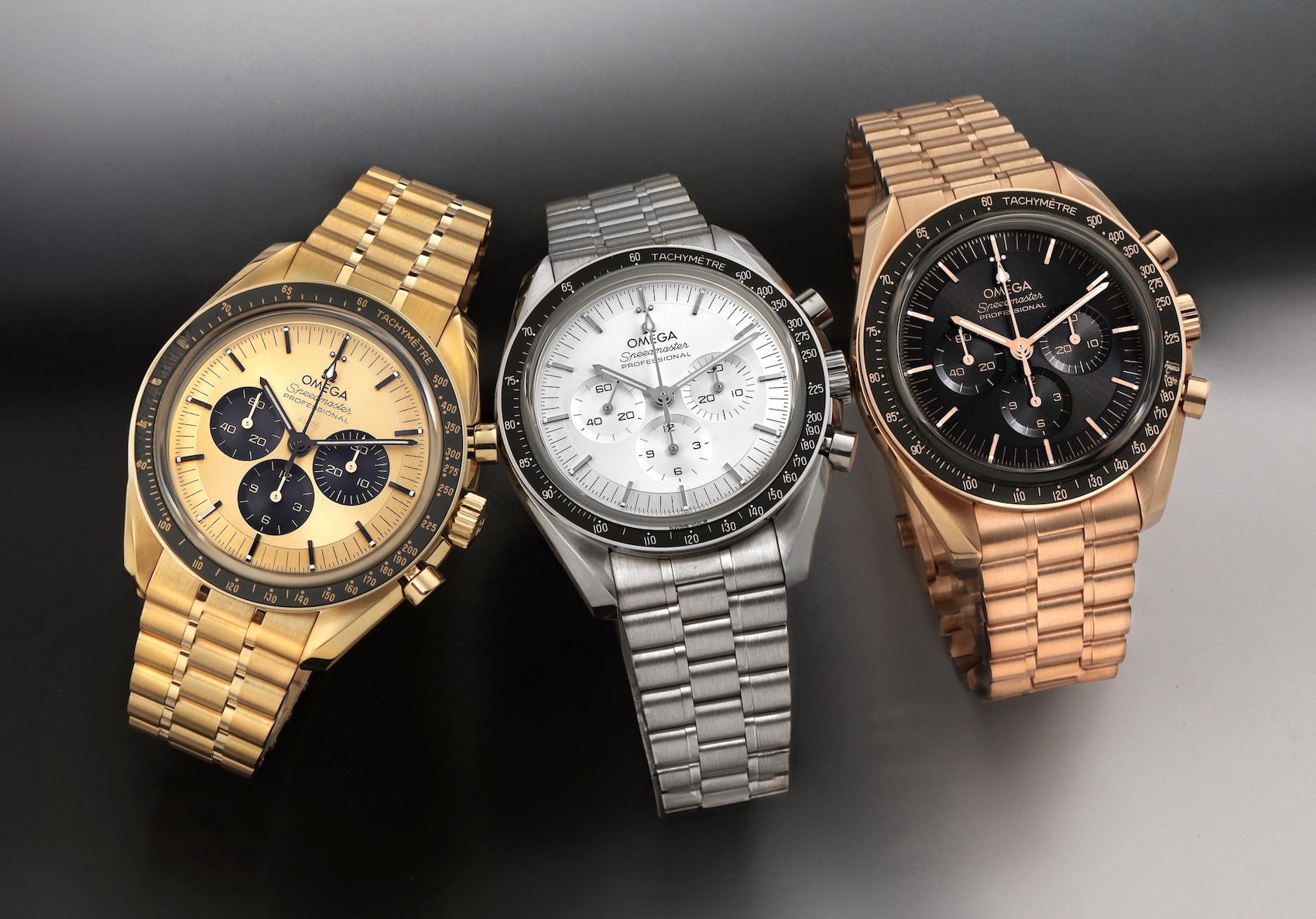
The industry alchemists at Omega are no longer content using the same standard 18K gold or stainless steel as everyone else. Instead, they have quietly spent the last decade building a state-of-the-art.mes tallurgy department in Bienne, dedicated to creating exclusive, high-performance alloys. Look no further than the visual evidence—when side-by-side, the three varieties of gold are not just subtly different colors; they are structurally distinct engineered solutions to historic metallurgical problems.
Rolex has its Oystersteel. But Omega has created an entire periodic table of proprietary metals—Sedna, Moonshine, Canopus, and O-MEGASTEEL. If you’ve ever wondered why your white gold watch is turning yellow, or why standard gold can somet.mes s seem too “brassy” for modern tastes, this is how Omega is rewriting the rules of luxury.
The Gold Problem: Why Standard 18K is No Longer Enough
By international standard, 18K gold is always exactly 75% pure gold. It’s the other 25%—the standard mixing elements like copper, silver, and zinc—that creates the color and the vulnerability. For centuries, this 25% has been susceptible to environmental damage, oxidation, and the loss of its signature hue over t.mes . Omega set out to lock their signature colors in permanently.
Sedna™ Gold: The Rose Gold That Never Fades
Let’s talk about the unfortunate reality of traditional rose gold. Historically, watchmakers relied heavily on copper to achieve that warm, reddish tint in their 18K cases. But copper has a fatal flaw: it reacts poorly to the elements. Give it a few decades of exposure to salty air, humidity, and the natural chemistry of the human wrist, and standard rose gold slowly loses its fire, oxidizing and fading back toward a dull yellow.
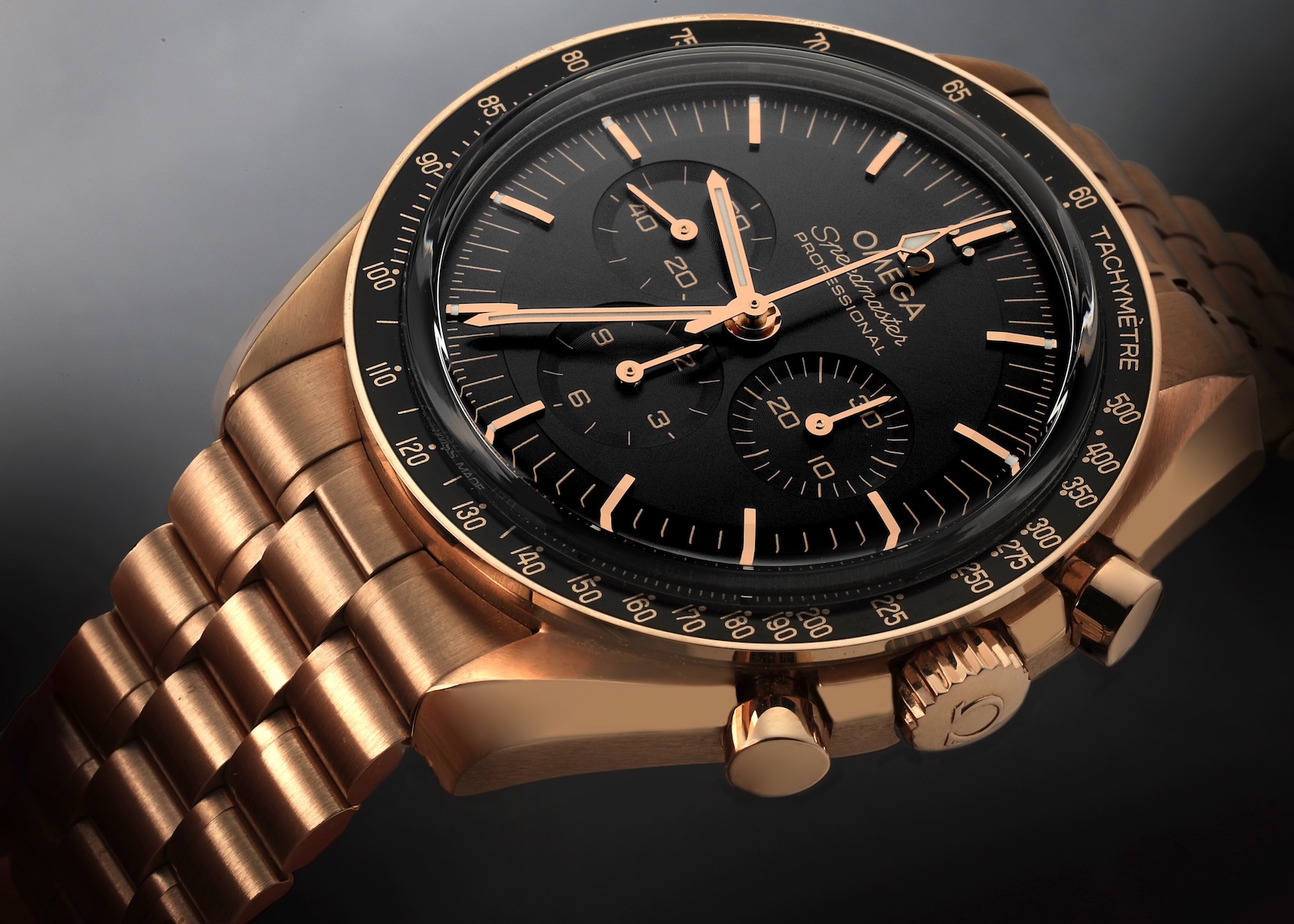
Omega wasn’t willing to accept that compromise. Back in 2013, they debuted Sedna Gold—an exclusive alloy named after one of the reddest dwarf planets on record. To stop the metal from losing its color over t.mes , Omega’s metallurgists introduced a heavy dose of palladium into the mix. This rare noble metal essentially traps the copper atoms, stabilizing the alloy so that the deep crimson hue you see on day one is the exact same color you’ll see fifty years later.
Moonshine™ Gold: The Soft, Pale Moonlight
Yellow gold is the undisputed king of vintage watchmaking, but let’s be honest—it can somet.mes s look a bit too loud, brassy, or overly warm for a modern aesthetic. When the 50th anniversary of the Apollo 11 moon landing rolled around in 2019, Omega wanted to celebrate with something entirely new. They needed a metal that felt historic but looked undeniably contemporary.
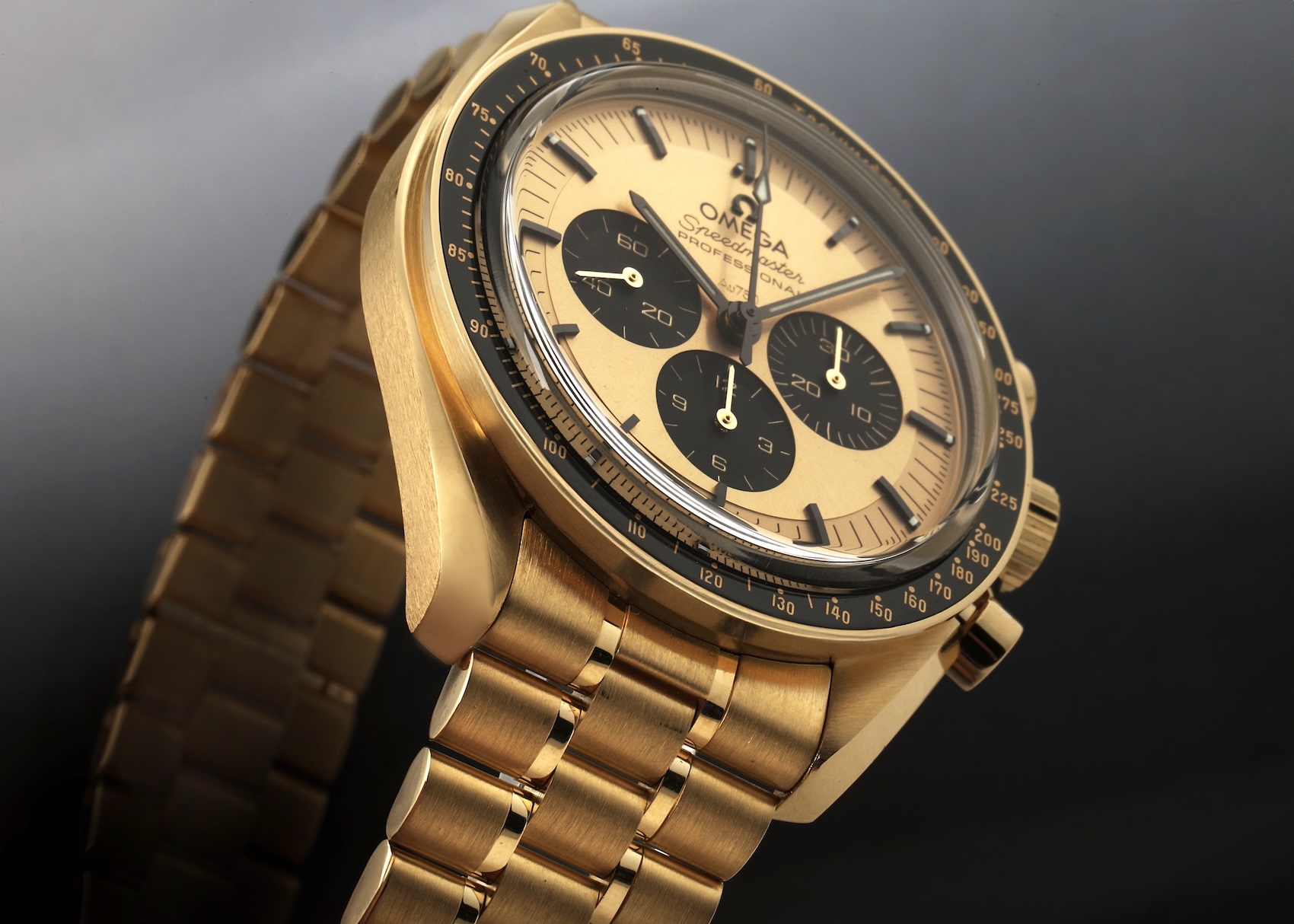
Their answer was Moonshine Gold. By re-engineering the traditional 18K framework and tweaking the ratios of silver, copper, and palladium, Omega created a noticeably paler, softer material. It perfectly captures the visual of moonlight shining in a dark sky, giving collects ors a stealthier, highly fade-resistant alternative to standard yellow gold.
Ready to experience Omega’s exclusive precious metals on your own wrist? Explore our collects ion of Omega watches at Top Quality Designer Watch Shop and find the perfect match for your collects ion.
Canopus Gold™: The 100% Brilliant White
Standard “white gold” is a bit of an industry misnomer. Most conventional 18K white gold alloys actually carry a slight yellowish tint. To get that perfectly bright, mirror-like silver finish, brands have to coat the watch in a microscopic layer of rhodium. When that plating inevitably wears off from desk-diving and daily wear, the dull base metal peeks through, leaving you with an expensive re-plating bill.
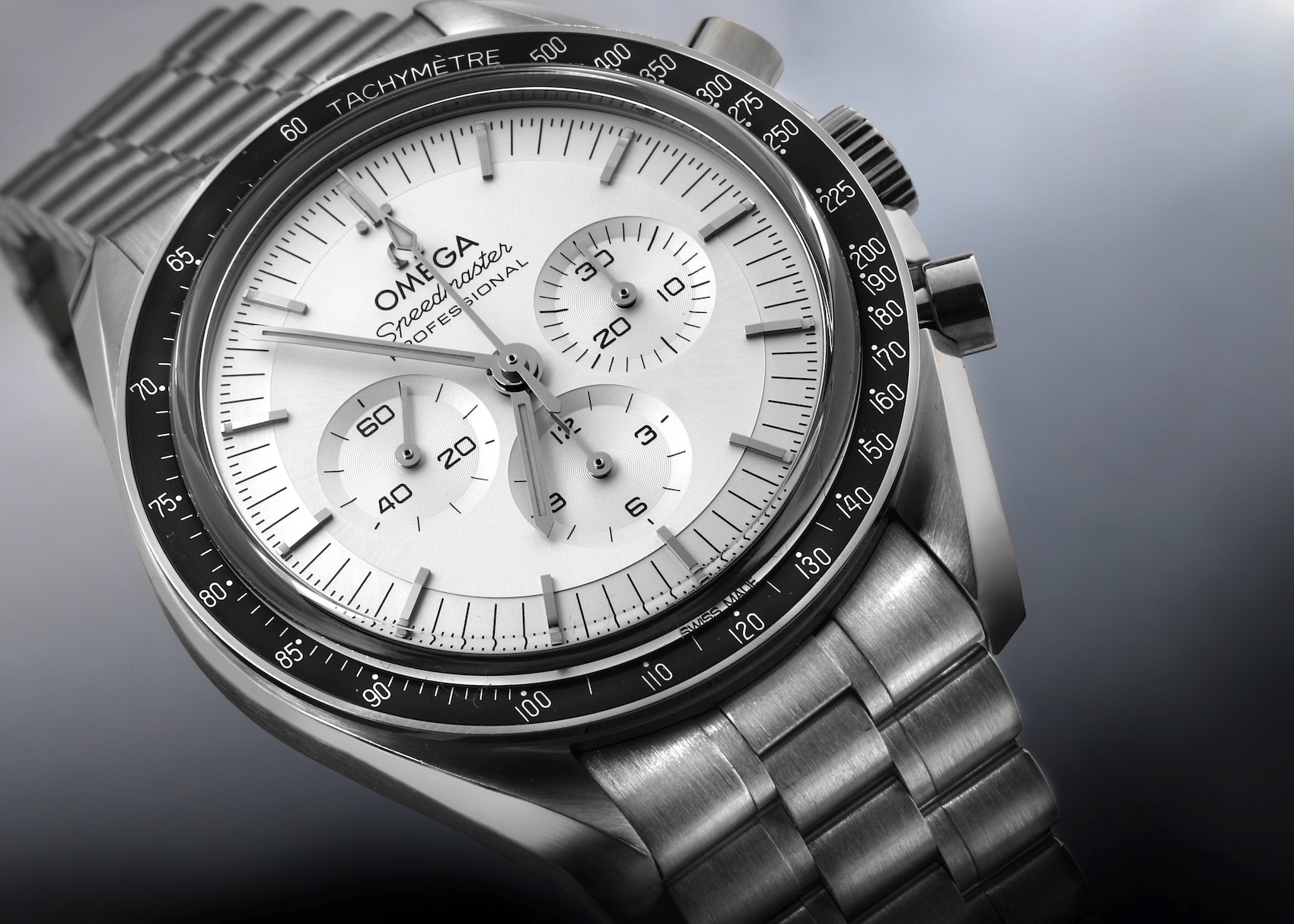
Omega circumvented this headache entirely with Canopus Gold, named after a star that burns 10,000 t.mes s brighter than our sun. By alloying pure gold with platinum, rhodium, and palladium, they forged a metal that is inherently, structurally white all the way through. It maintains a brilliant, high-sparkle radiance forever, and it never needs to be re-plated.
Engineering the Ultimate Steel: O-MEGASTEEL
For years, the luxury watch world has debated the merits of standard 316L stainless steel against the highly durable 904L. Omega’s answer arrived in 2022, effectively ending the conversation with the release of the record-breaking Seamaster Planet Ocean Ultra Deep.

They called it O-MEGASTEEL. This high-performance alloy bypasses the standard melting process entirely, utilizing a pressurized electro-slag remelting technique that yields incredible purity. The result is a metal with a yield strength twice that of conventional 316L steel, designed to withstand the crushing pressure of the deepest oceanic trenches. It is also 40-50% harder, making it exceptionally scratch-resistant.
The Alchemist’s Final Touch: Bronze Gold and Ceragold
Bronze Gold: The Patina That Stays Wearable
The watch community has a love-hate relationship with bronze. Enthusiasts adore the unique, nautical patina the metal develops, but that patina is technically just copper oxidation (verdigris). It is notoriously soft, turns your skin green, and can eventually eat away at the watch case.
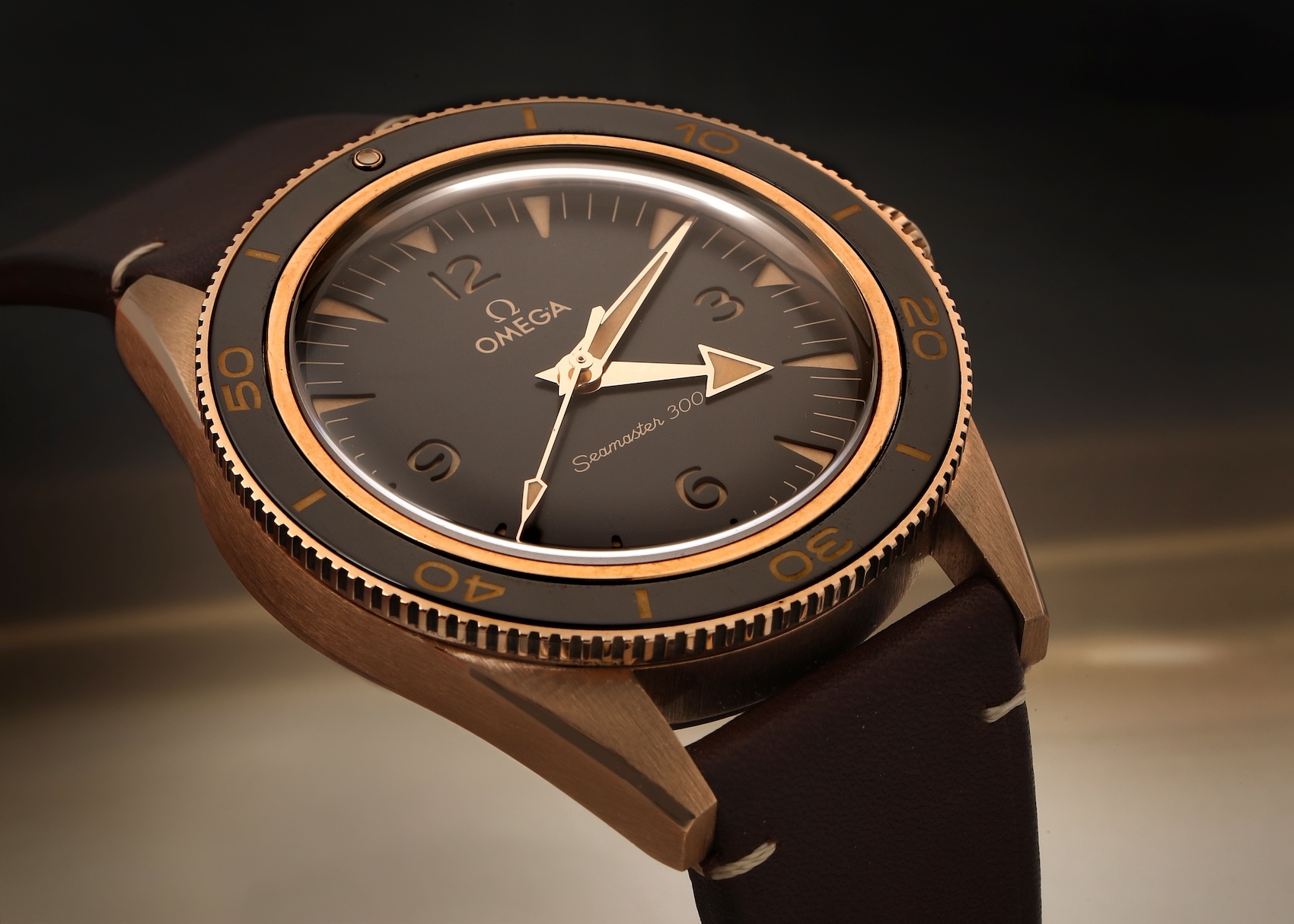
Omega wanted the vintage charm without the chemical downside. Their patent-pending Bronze Gold is a brilliant hybrid: exactly 9K gold (37.5%) mixed with palladium, silver, and copper. It still ages slowly into a beautiful, dark brown hue, giving you that personalized vintage soul. But because of the high precious metal content, it will absolutely never turn green or stain your wrist.
Ceragold™ and Liquidmetal™: Ceramic Fusion
Omega’s metallurgical prowess extends far beyond the watch case itself and right into the bezels. For years, the challenge with ceramic bezels was figuring out how to add the numerals and minute tracks without them eventually scratching or wearing away from heavy use.
Omega solved this with Liquidmetal—an amorphous, zirconium-based alloy that cools without forming a crystalline structure, making it a staggering three t.mes s harder than standard steel.
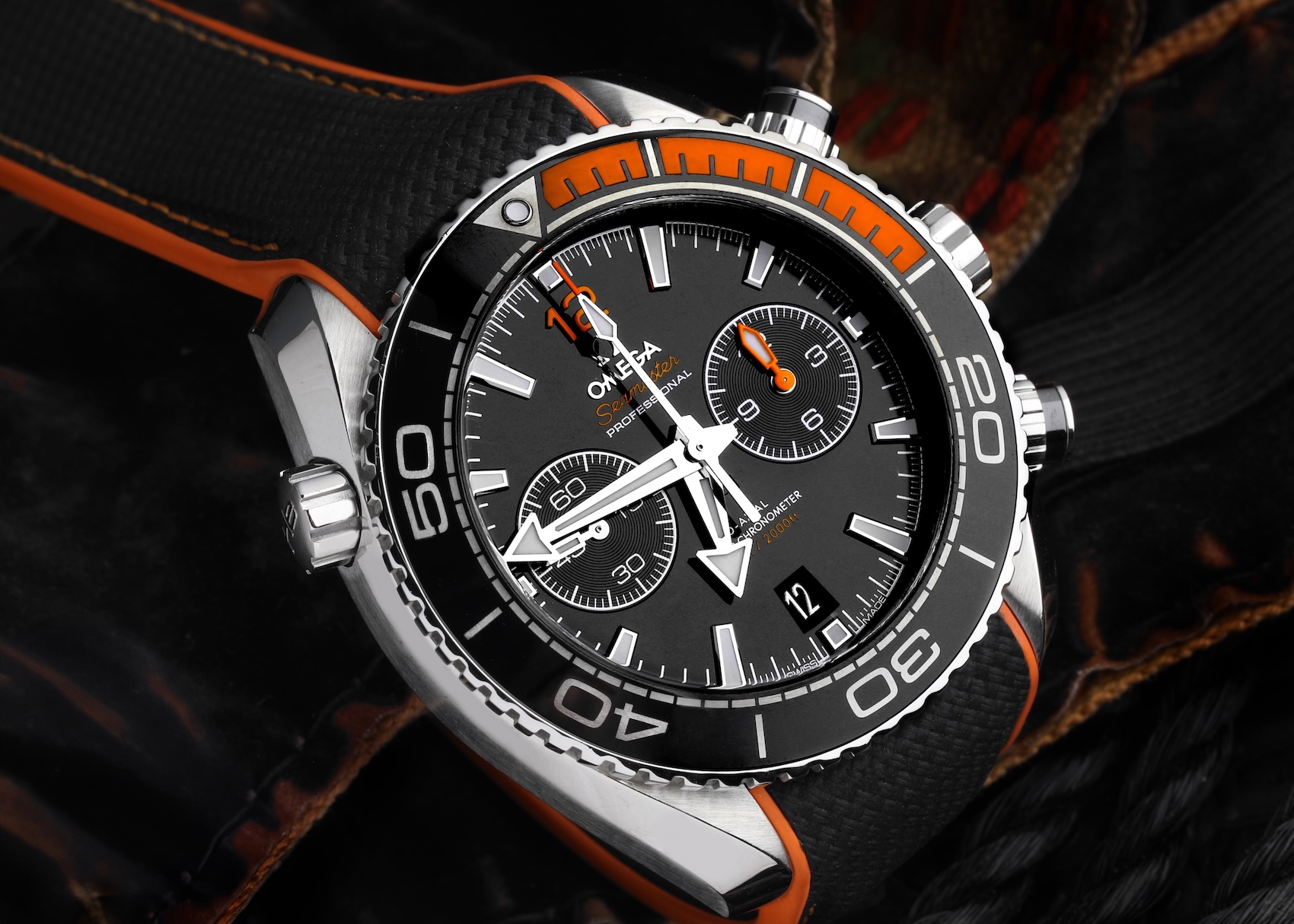
By pressing this incredibly hot, hard metal directly into engraved zirconium-oxide ceramic bezels, Omega creates perfectly flush minute scales that are practically impervious to wear.
For their precious metal pieces, they take this a step further with their proprietary Ceragold process.
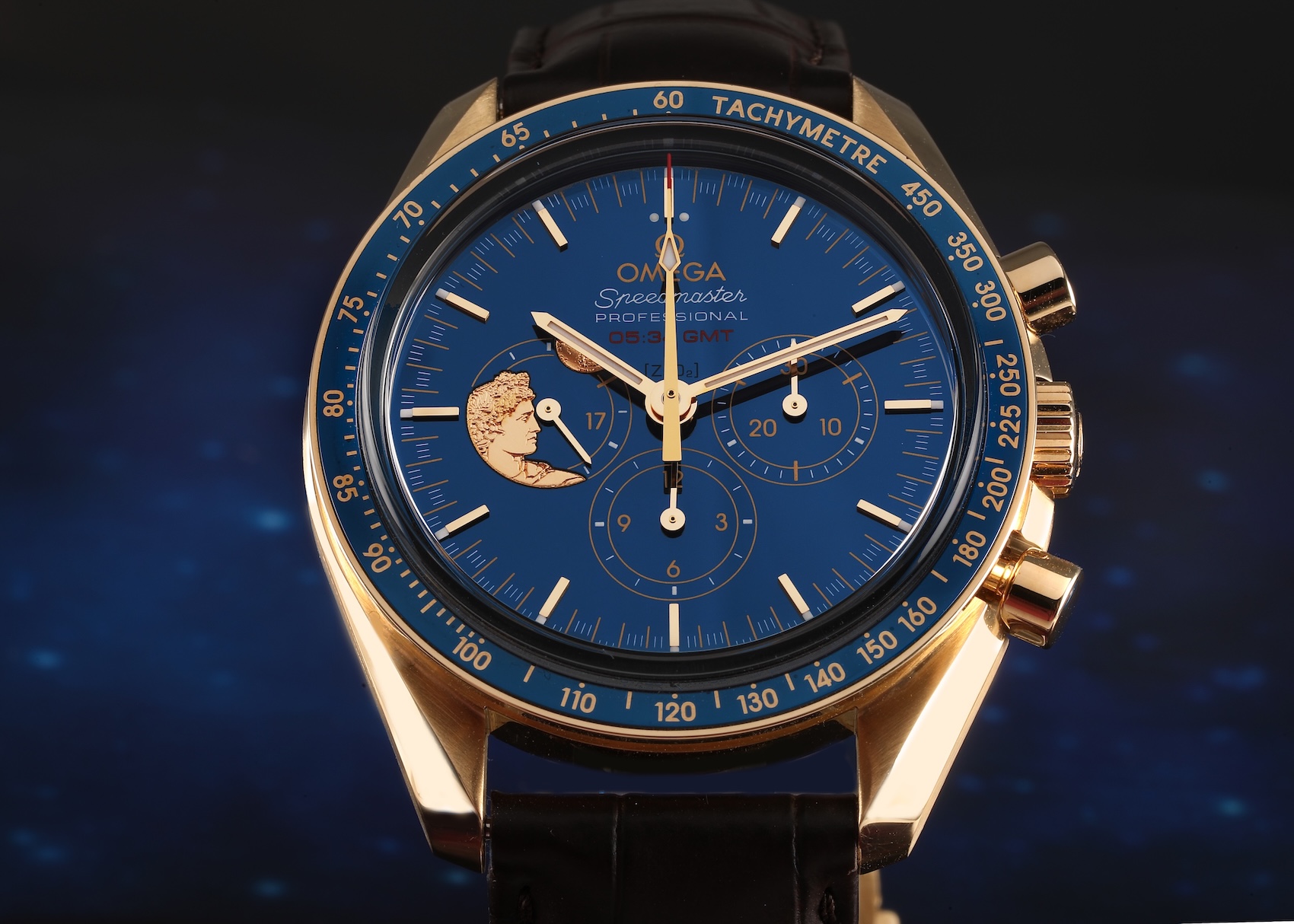
Rather than just painting or plating gold onto the bezel, the Ceragold process allows Omega to flawlessly integrate solid 18K gold directly into the ceramic. Run your finger over the tachymeter scale of a Ceragold Speedmaster, and you won’t feel a single ridge or transition line. It is a finish that is tactilely perfect and engineered to endure forever.
The New Frontier of Value
Omega’s heavy investment into exclusive metallurgy signals a deep commitment to innovation that extends far beyond their famous co-axial movements. For collects ors, these proprietary alloys offer more than just impressive branding; they provide tangible, everyday performance benefits. Whether it is a rose gold that will retain its fire for a lifet.mes , white gold that laughs at the concept of re-plating, or a hyper-steel that is twice as strong, Omega has proven that true luxury is built at the atomic level.
Are you ready to add an Omega masterpiece to your rotation? Whether you are drawn to the immortal warmth of Sedna Gold or the rugged, bright finish of O-MEGASTEEL, shop our extensive collects ion of pre-owned Omega watches at Top Quality Designer Watch Shop and find a t.mes piece engineered to last generations.